
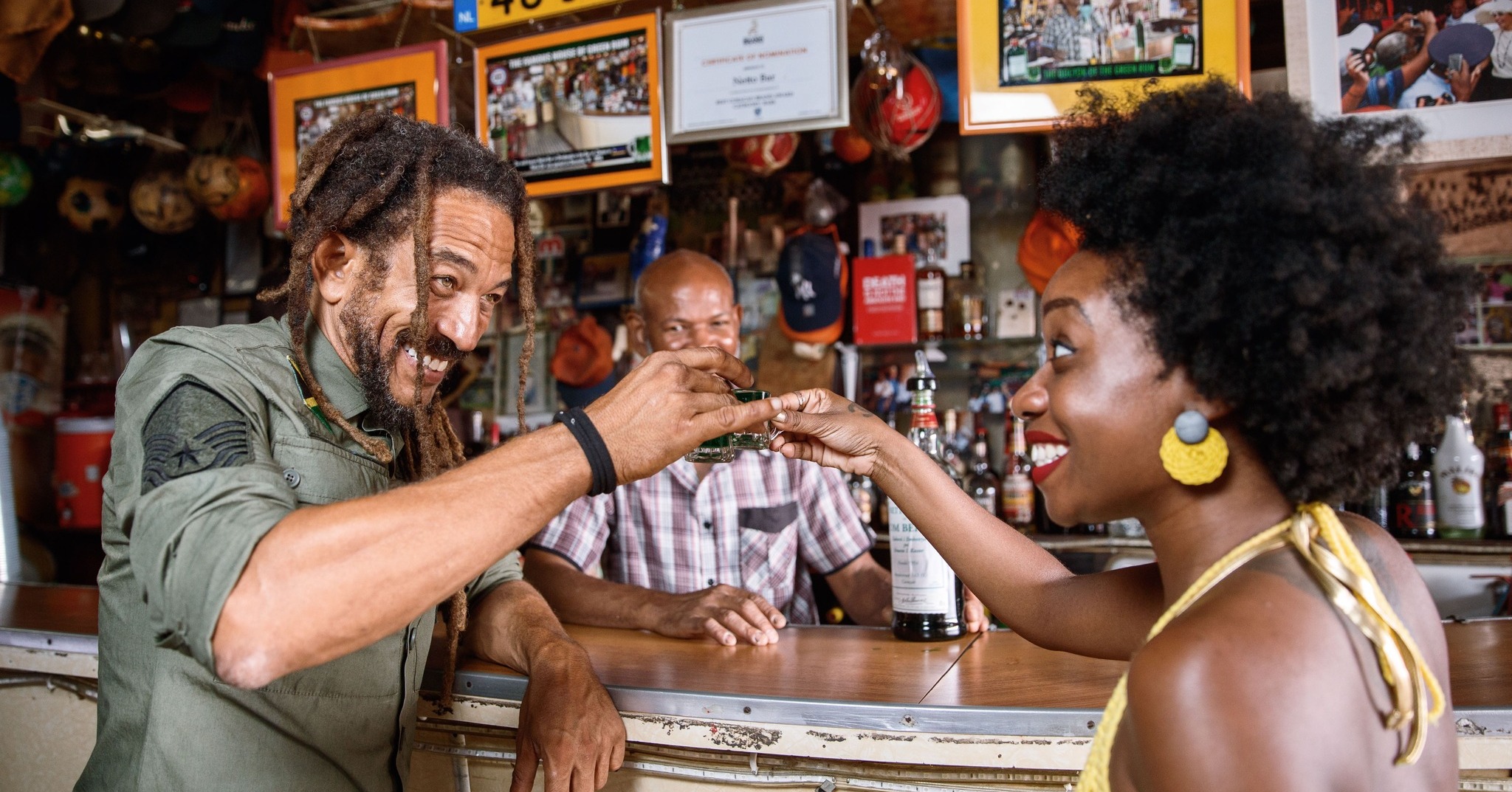
Photo: Netto Bar, a real spot on Snekkie
Food · 5 min read
Pastechi Curaçao: The Snack That Starts Every Snek Tour Right
Published on May 26, 2026
Close your eyes and picture a Curaçao morning. The air is already warm. Somewhere a rooster is crowing. You pull up to a snekkie, and before you have even parked, the smell hits you — hot oil, golden dough, something savoury and impossibly good. You order one. You eat it standing at the counter in two bites. You order another. That is the pastechi. There is nothing quite like it anywhere else in the world.
What Is a Pastechi?
A pastechi Curaçao is a deep-fried pastry with a thin, slightly flaky crust, shaped like a half-moon or a small round pocket. The dough is light — lighter than you expect — with a faint sweetness that works perfectly against the savoury filling inside. The outside cracks when you bite into it. The inside is warm, moist, and full of flavour.
They are sold at virtually every snekkie on the island, most of which open from around 6 am precisely because the pastechi is a breakfast food. You eat it hot, fresh from the fryer. Waiting even five minutes diminishes it. At 1.50 to 3 ANG — a handful of Antillean Guilders — it is also one of the most generous value exchanges you will find anywhere in the Caribbean.
The pastechi's origin sits at a crossroads of cultures. Venezuelan empanada traditions arrived through centuries of trade across the narrow sea between the islands and the South American mainland. Dutch pastry techniques came with colonial settlement. Over generations, Curaçaoan cooks made it their own — and the result is something distinct from both ancestors.
The Pastechi Variations: Which Filling Wins?
Ask ten Curaçaoans which filling is best and you will start ten different arguments. Here is the honest breakdown:
- Keshi (cheese) — young Gouda that melts into the hot dough and pulls apart in soft, creamy strings. This is the most popular filling and the one most visitors try first. It is easy to understand why: the mild richness of the keshi against the crunch of the crust is close to perfect.
- Atún (tuna) — flaked tuna seasoned with onion, soft peppers, and spices. It has more bite than the cheese version, a little more character. A strong second choice and the favourite for those who want something a little lighter.
- Karni (spiced ground beef) — slow-cooked with sofrito and aromatics, the karni filling is the heartiest option. Order this one and you will not need breakfast for a while.
- Galinja (chicken) — a slightly leaner option with a mild, savoury flavour. Common and consistent across most snekkies.
- Bakijou (salted codfish) — this is the one the purists defend. Salted cod — the same bacalao that crossed the Atlantic in trading ships for centuries — soaked, shredded, and seasoned into something deeply savoury. Pastechi di bakijou is considered the most traditional filling by those who know the dish's history, and it is worth going out of your way to find a snekkie that still makes it well.
If you are trying pastechi for the first time, start with keshi. Then come back for bakijou. Those two define the full range of what this pastry can be.
Pastechi vs. Empanada: Why They Are Not the Same
The question comes up constantly, especially from visitors who have eaten their way across Latin America. Is a pastechi just an empanada? The short answer is no. The longer answer is worth understanding.
Venezuelan and Colombian empanadas typically use a corn-based dough — masa — which is denser and has a grittier texture. Pastechi dough is wheat-based, lighter, and has that slight sweetness already mentioned. It is closer to a pastry than a corn shell. The frying technique also differs: pastechi are cooked at a temperature that produces a very thin, blistered exterior rather than the thicker crust you get on most empanadas.
Nor is it a Jamaican patty, which uses a turmeric-yellowed dough with a very different spice profile and a more crumbly texture. The pastechi is its own thing — shaped by the same hemisphere but distinct in every way that matters when you are eating it.
What the pastechi shares with both is the idea: portable, affordable, filling, community food. In that sense they are cousins. But the pastechi Curaçao is the island cousin who turned out to be the most interesting one at the reunion.
The Cultural Weight of a Pastechi
Food that is eaten daily becomes something more than food. The pastechi is part of the rhythm of life on Curaçao in a way that is hard to overstate.
The morning ritual is this: you stop at the snekkie on the way to work. You order one or two, you eat them at the counter or in the car, and you drive on. This happens across the island, every morning, at tens of thousands of counters. It is the local equivalent of a coffee and a croissant in Paris — except it costs less and the dough is better.
Sunday pastechi culture is its own category. Many families do not buy them on Sunday mornings — they make them at home. The dough comes from a recipe that has been in the family for decades. The fillings are prepared the night before. Children are put to work on the folding and crimping. The whole house smells like hot oil by 8 am. This is not nostalgia; this is a living tradition in thousands of Curaçaoan households today.
"Dushi" — that Papiamentu word for wonderful, sweet, beloved — is the only word that truly fits a pastechi eaten on a Sunday morning, still too hot to hold properly.
Bon kome. Enjoy your food. That is what you say when you hand someone a pastechi and it is perfect.
Where to Find the Best Pastechi in Curaçao
The honest answer is: at a snekkie where they make the dough fresh every morning. You can usually tell. The crust is thinner. The colour is a deeper gold. There is no grease residue on the paper it was wrapped in.
Look for queues. A snekkie that has a line before the morning tray is even out of the fryer has earned that line. Community favourites cluster in working neighbourhoods — Seru Fortuna, Marchena, Otrobanda, Punda — where snekkies have served the same streets for decades. The Sunday market areas attract some of the island's best pastechi vendors.
To find pastechi spots near you on the Snekkie map, open the app and filter by category. Spots with strong pastechi reputations are flagged by the community — that crowd-sourced local knowledge is more reliable than any guidebook.
Pastechi as a Snek Tour Starter: Why Every Route Begins Here
If you are planning a full Snek Tour, the pastechi is your first stop — almost by law. It is cheap enough that it does not fill you up before the main event. It is savoury enough to wake up your palate. And it gives you an immediate, honest read on the snekkie you are at: if their pastechi is excellent, the rest of the menu will be too.
Think of it as the opening note of a song. The pastechi sets the tone for everything that follows — the grilled fish at the next stop, the cold Amstel Bright at the one after that, and eventually the truki pan to end your Snek Tour on a warm, bread-and-butter note. The pastechi and the truki pan are the bookends of a perfect food day on the island.
A Note for the Diaspora
If you grew up in the Netherlands with parents or grandparents from Curaçao, you already know all of this. You know the smell. You know the sound of the dough going into the oil. You know the way the kitchen fills up on a Saturday afternoon when someone decided to make a batch. You know the particular pride of bringing a tray to a party and watching them disappear in ten minutes flat.
Dutch-Caribbean communities have kept the pastechi tradition alive across the diaspora for generations. It is made at church events, at family reunions, at birthday parties in Rotterdam and Amsterdam and Den Haag. It travels in memory when it cannot travel in person.
If you have not been back to the island in a while, know this: the snekkies are still there. The recipes are still the same. The first pastechi off the fryer still tastes exactly like it always did. Some things on Curaçao change slowly, and this is one of them — and that is entirely the point.
Find Pastechi Spots with the Snekkie App
The Snekkie app was built specifically to surface the local knowledge that visitors miss and that even long-term residents sometimes lose track of. Every snekkie on the map has been added by someone who ate there and thought it was worth sharing.
If you are on the island — find pastechi spots near you on the Snekkie map right now. Filter, tap a pin, see what the community says, and go. Eat it hot.
And if you are reading this from the Netherlands, making dough on a Saturday morning with the recipe your family brought from Curaçao: you are keeping something real alive. Bon kome.