
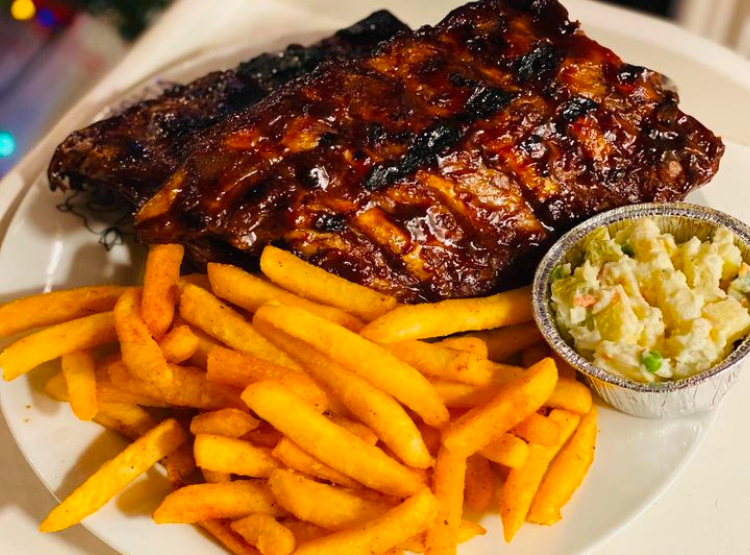
Foto: Cafe De Tijd, un lugar real en Snekkie
Comida · 6 min de lectura
Keshi Yena: Curaçao's Iconic Stuffed Cheese Dish and Where to Find the Best One
Publicado el 26 de mayo de 2026
Some dishes are born in palace kitchens and served to kings. Others are born in necessity — assembled from scraps and invention and hunger — and become something far more lasting. Keshi yena is the second kind of dish. It started at the margins of Curaçao's colonial history and ended up at the centre of its national identity. It is, by any measure, one of the most interesting things you will ever eat.
What Is Keshi Yena?
The name comes straight from Papiamentu, Curaçao's creole language: keshi means cheese, and yena means filled or stuffed. Keshi yena, then, is quite literally a stuffed cheese — and that description, while accurate, radically undersells what arrives on the table.
Picture a whole Gouda cheese. The interior has been carefully scooped out, leaving a thick wax-coated shell. That hollow shell is packed with a deeply spiced filling — braised chicken or beef, slow-cooked with onion, tomato, capers, green olives, raisins, cashews, sometimes prunes, always aromatics — and then the top is replaced, and the whole thing is either steamed or baked until the cheese wall melts inward around the filling, sealing it into a single, unified dish. When you cut through it, the cheese and the filling have become inseparable. That is the point.
The result is something you cannot quite compare to anything else. The Gouda, which began as a firm, mild Dutch import, has transformed into something softer and more complex under the heat — creamy but structured, with the flavour of the spiced filling running through every bite. The raisins provide sweetness. The capers and olives cut against that sweetness with salt and brine. The cashews add texture. The whole thing is at once familiar and completely unlike anything in the culinary tradition it came from.
The Surprising History: Dutch, Jewish, and African Origins
To understand keshi yena, you need to go back to the 17th and 18th centuries, when Curaçao was one of the most important trading hubs in the entire Atlantic world. The Dutch West India Company had made Willemstad a central node in a network that stretched from Amsterdam to West Africa to the Americas. Ships carrying enslaved people, sugar, spices, and goods of every kind passed through its harbour. And among the merchants who settled and built lives in Curaçao's thriving port city was a significant community of Sephardic Jews — some of the earliest Europeans to arrive on the island, having fled the Inquisition in Portugal, Spain, and Brazil.
These Jewish merchants were significant importers of Gouda and Edam cheese from the Netherlands. Rounds of Dutch cheese were a standard trading commodity, preserved in their wax coatings and stable enough to survive Atlantic crossings. The merchants ate the cheese itself; the hollowed-out rinds — the shells that remained after the interior was used — were discarded or given away.
They were given, among others, to the enslaved Africans who worked in and around those households and warehouses. And those workers, as enslaved people throughout the Americas consistently did, transformed what they were given into something extraordinary. They took the cheese rinds and filled them with what they had: scraps of spiced meat, whatever vegetables and seasonings were available, dried fruit from the trading ships. They steamed the whole assembly until the cheese softened and the filling cooked through. And keshi yena was born.
What began as a dish made from discarded rinds and cooking scraps became, over generations, a centrepiece dish — something you make on a Sunday, for a celebration, for family. The recipe was refined, the fillings grew richer, the technique became more deliberate. The cheese was no longer a discarded rind but a fresh, intact Gouda purchased specifically for the purpose. But the essential structure — the spiced filling, the enclosing cheese, the long slow cook — remained. A dish born from necessity and inequality became a national treasure, claimed by the whole island.
That origin story matters. It is a reminder that Curaçao's food culture — like its language, its music, and its architecture — was not built by any single group but by the collision and combination of all the peoples who passed through or were brought to this island. Keshi yena carries that history in every bite.
How It Is Made: The Recipe Overview
A traditional keshi yena is a serious undertaking. You are not making a quick weeknight meal. You are making something for a table full of people, probably on a weekend, probably while others drift in and out of the kitchen to see how it is going.
The process starts with a whole Gouda — a real one, not a sliced supermarket wedge. The interior is carefully scooped out with a spoon or a small knife, working slowly to keep the shell intact. The scooped-out cheese is either incorporated into the filling or set aside. The shell, which still holds its wax coating on the outside, becomes the vessel.
The filling is built in a pan over time. Chicken or beef is the base — traditional recipes use beef, but chicken (galinja) has become the most common version today. The meat is braised with a sofrito-style base of onion, garlic, and tomato, then layered with green olives, capers, raisins, cashews, sometimes prunes or other dried fruit, fresh herbs, and a blend of spices that varies by family and by hand. There is no single canonical recipe; there are as many versions as there are cooks. The filling is cooked until it is cohesive — moist but not wet — so it holds its shape inside the cheese.
The filled cheese shell is then either steamed in a pot with a small amount of water, or baked in the oven. Both techniques work. Steaming produces a slightly softer result; baking gives more structure and a hint of browning where the cheese meets the heat. The cook time is long enough for the cheese walls to soften completely and the filling inside to finish cooking through. When it comes out — whole, intact, steaming — it is set on the table and cut open in front of everyone. That moment is part of the dish.
The Best Variations: Chicken, Beef, or Something Different?
The keshi yena debate on Curaçao is not unlike the keshi yena dish itself: layered, opinionated, and ultimately coming down to who raised you and what was on the table when you were growing up.
Galinja (chicken) is the most common version today and the one most visitors encounter first. Chicken takes on the spices well, stays moist inside the cheese during the long cook, and produces a filling that is slightly lighter than the beef version. It is the everyday version — the one you find at Plasa Bieu on a Tuesday, the one most snekkies serve when they have it on the menu.
Karni (beef) is the traditional version and the one older Curaçaoans will often insist is the correct one. Slow-braised beef has a depth that chicken cannot quite match — a richness that holds its own against the sweet raisins and salty capers. If you find a spot serving the beef version, try it. It is the closer link to the dish's original form.
Fish versions exist, though they are rarer and more regional. Some coastal communities on the island make a keshi yena with seasoned fish — typically a firm white fish or salted cod in the bakijou tradition — and the result is lighter and more delicate than either meat version. Worth seeking out if you come across it, but do not expect to find it easily.
There are also modern interpretations at some of Willemstad's more experimental restaurants — smaller individual portions made with baby Edam rather than a full Gouda, or versions with unconventional fillings. These have their place, but they are not the dish in its original form. Start with the traditional. Come back to the variations once you know what you are varying from.
Where to Find the Best Keshi Yena in Curaçao
Plasa Bieu in Punda is the first and most important answer. Plasa Bieu — the Old Market — is a covered market building in the heart of Punda where a small number of local women run individual stalls, cooking traditional Curaçaoan dishes from recipes that have not changed in decades. This is the most authentic and consistent place to eat keshi yena on the island. It is open weekdays for lunch only, it fills up fast, and you should arrive by noon. Order the keshi yena if it is available that day; it often sells out before 1 pm. Read more in our full guide to Plasa Bieu.
Beyond Plasa Bieu, keshi yena appears across the island at local snekkies and home-style restaurants — the kind of places that have a handwritten menu board and a daily special that depends entirely on what the cook decided to make that morning. These are harder to predict but often the most memorable. The dish is not fast food; a snekkie that makes keshi yena properly has put real work into it, and that shows.
It is also worth knowing that keshi yena is a celebratory dish — something made for weddings, Christmas, birthdays, and the long Sunday family lunches that are a cornerstone of Curaçaoan home life. If you are lucky enough to be invited to a family meal on the island and keshi yena appears on the table, you are being shown something that matters.
To find spots near you, use the Snekkie discover map and filter by food type. The community keeps it current — local knowledge, not a static guidebook.
Keshi Yena on the Snekkie Map
Keshi yena is one of those dishes that does not always make it onto a menu board — it is made when someone decides to make it, and the only way to know is to ask, or to know someone who knows. That is exactly the kind of local knowledge the Snekkie app was built to surface.
Snekkies and local spots across Curaçao that regularly serve keshi yena are tagged and community-reviewed on the map. You can filter by food type, check what people have said recently, and confirm via WhatsApp before you make the drive across the island for a dish that may or may not be available that day.
Keshi yena is listed under the UNESCO framework for intangible cultural heritage of Curaçao — recognition that a dish born from the island's most difficult history has become one of its most treasured cultural expressions. It deserves to be eaten at a table with people around it, with enough time to finish it properly. Find a spot, plan the visit, and go.