
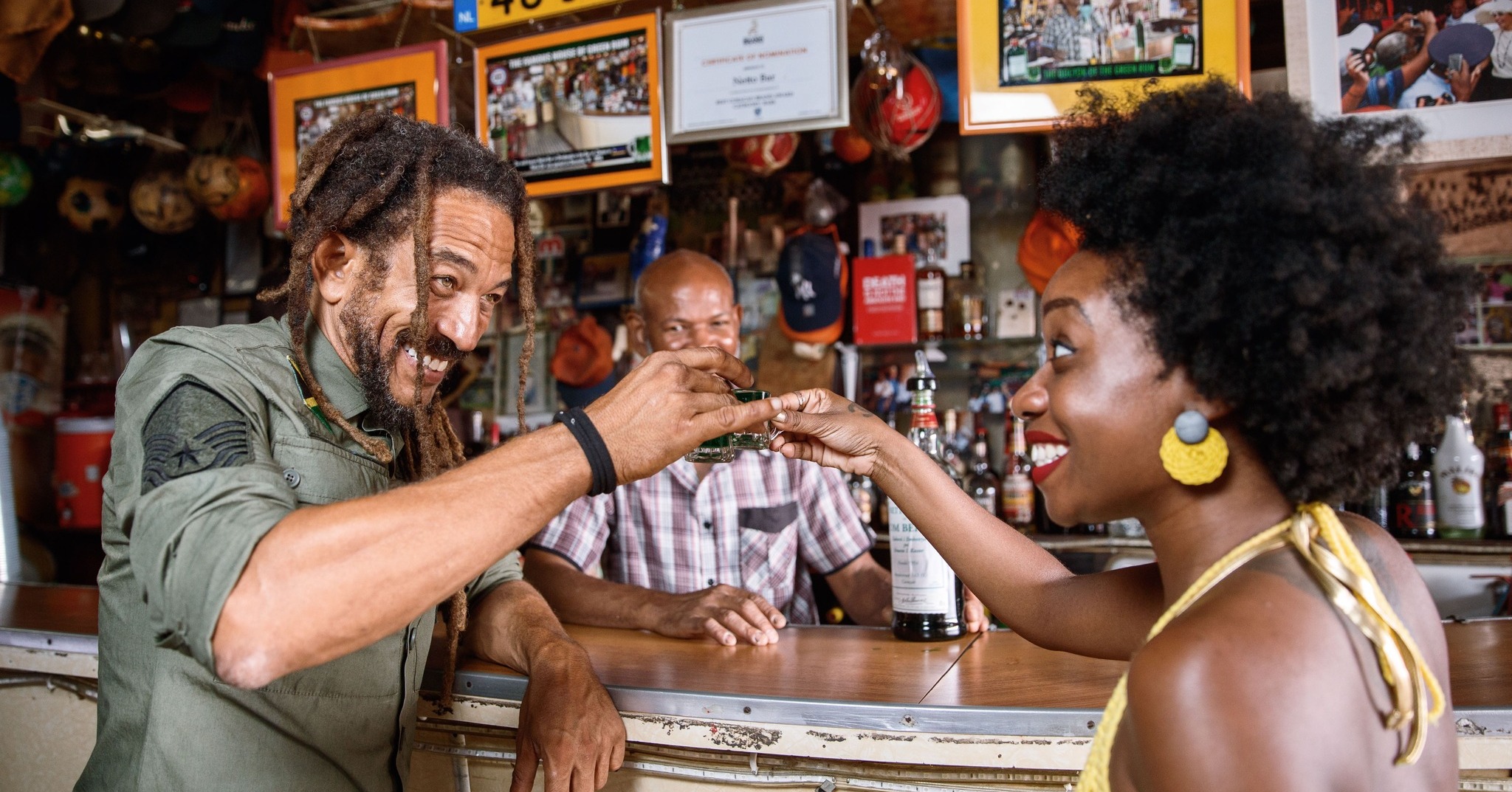
Foto: Netto Bar, un lugar real en Snekkie
Historia · 6 min de lectura
Curaçao Rum Guide: Forget the Blue Liqueur — Here's What Locals Actually Drink
Publicado el 26 de mayo de 2026
Every visitor to Curaçao leaves with a bottle of Blue Curaçao in their airport bag. It is bright, it is photogenic, and it turns cocktails an electric shade of turquoise. It is also, to put it plainly, not what anyone on the island actually drinks. If you want to understand how Curaçaoans drink — the rhythm of it, the culture of it, the unmistakable flavour of it — you need to know about Ròm Bèrdè.
Blue Curaçao vs. What Locals Drink
Blue Curaçao is a liqueur, not a rum. It is made from the dried peel of the laraha citrus — a bitter, inedible orange that grows on the island and produces one of the world's most distinctive botanical flavours when its rind is dried and steeped. The original and most famous producer is Senior & Co, who have been distilling it at their colonial-era Chobolobo Mansion in Salinja since 1896. The mansion tour is genuinely worth doing for the history alone, and the product has earned its place in the global cocktail canon.
But here is what you need to understand: Blue Curaçao was designed for export. It is a bartender's ingredient, a mixer for global cocktail lists. You will not find locals ordering a round of Blue Curaçao at a snekkie. The drink that anchors local drinking culture is something altogether different — cheaper, stronger, colder, and deeply communal.
That drink is Ròm Bèrdè. And once you have had one, properly, in the right place, you will understand why no tourist liqueur can compete with it.
Ròm Bèrdè: The Green Rum Explained
The name translates directly from Papiamentu: ron means rum, bèrdè means green. Ròm Bèrdè is a green-tinted white rum — the colour comes from the production process rather than any added ingredient — and it has been the spirit of choice for working-class Curaçaoans for generations. It is not a cocktail rum. It is not aged. It is not trying to be anything except exactly what it is: an honest, high-proof local spirit that costs very little and goes down very cold.
The standard serve is ice-cold — sometimes as a shot straight, more often with ice and a pour of coconut water. The combination is simple and perfectly calibrated to the climate: the harshness of the rum is softened by the natural sweetness of the coconut water, and the cold cuts through the heat of the day in a way that no European spirit ever quite manages. You do not sip Ròm Bèrdè slowly to analyse its notes. You drink it with company, at a counter or at a plastic table, in a neighbourhood bar where everyone knows each other.
The most famous place on the island to drink it is Netto Bar in Otrobanda — the western district of Willemstad across the iconic Queen Emma pontoon bridge. Netto Bar has served Ròm Bèrdè since 1954. It is arguably the most legendary snekkie on the island, and certainly the most important institution in Curaçaoan drinking culture. Their signature cocktail, the Netto Colada, is the drink that visitors tend to remember long after they have forgotten the name of every fancy restaurant they visited. Read the full guide to Netto Bar if you are planning a visit.
Another local brand worth knowing is Ronchi di Koch, which you will find at snekkies across the island. It is less famous than the Netto Bar association but holds its own as a staple of neighbourhood bars and roadside spots. If a snekkie has it behind the counter, it is a good sign that you are in the right kind of place.
Amstel Bright & Polar: The Beers of Curaçao
Not every drinking moment calls for rum, and Curaçao has two beers that are as embedded in local life as the rum is.
Amstel Bright is the beer of the island. It is brewed locally — on Curaçao itself — under licence from Heineken, and the local production makes a genuine difference to how it tastes. Amstel Bright is a pale lager, light in body but with enough character to hold its own in the heat. It is ubiquitous at snekkies. You will see it in coolers at every roadside stand, at beach bars, at fish fry spots. If you order a beer in Curaçao and do not specify otherwise, Amstel Bright is almost certainly what you will receive.
Polar is the second constant. Imported from Venezuela — whose coastline is visible on a clear day from the eastern tip of Curaçao — Polar has a long history on the island that tracks the movement of people between the two places. It is lighter than Amstel Bright, slightly more neutral, and the Venezuelan connection gives it a particular cultural significance in communities with roots across the water. At many local bars you will see both, and ordering a Polar signals a certain knowledge of the island's layered heritage.
Both beers are served ice-cold. Always. There is no version of a warm Amstel Bright at a Curaçao snekkie. The cooler is one of the most essential pieces of equipment in any neighbourhood bar, and it is always running.
The Best Bars and Snekkies to Drink Like a Local
The best drinking spots on Curaçao are not in hotel lobbies or resort bars. They are in neighbourhoods — and finding them requires either local knowledge or a good map.
Netto Bar, Otrobanda is the non-negotiable starting point. It sits on the Otrobanda waterfront, close to the Queen Emma bridge, in a building that has not changed much in seventy years. The prices are low, the Ròm Bèrdè is always cold, and the Netto Colada is one of the most satisfying drinks you will have on the island. Go in the early evening when the light is on the water and the bar is starting to fill up.
Beyond Netto Bar, look for neighbourhood snekkies in Seru Fortuna, Marchena, Buena Vista, and the smaller streets of Punda. These are the places where the real drinking culture lives — not the tourist-facing spots but the counters where the same regulars have been showing up for decades. A cooler of Amstel Bright, a bottle of Ròm Bèrdè behind the counter, and a few plastic chairs outside is all the infrastructure required for an excellent evening.
Use the Snekkie map to find verified local spots near you. The community pins are added by people who actually eat and drink at these places — that local knowledge is worth more than any review aggregator.
Curaçao's Liqueur Heritage: The Blue Curaçao Story
It would be unfair to dismiss Blue Curaçao entirely. The story of how a bitter, inedible citrus that colonists planted hoping to profit from it became one of the world's most recognisable liqueur ingredients is genuinely interesting, and the Senior & Co Chobolobo Mansion is one of the better heritage experiences on the island.
The laraha orange was brought to Curaçao by the Spanish, who planted Valencia orange trees in the hope of establishing a citrus industry. The dry, calcium-rich soil and the harsh climate transformed the Valencia trees into something unrecognisable — the laraha is too bitter to eat, its flesh almost inedible. But the rind, when dried in the sun, concentrates into a powerful botanical ingredient. The Senior family found this out, and built an industry from it.
The blue colour is a later addition — a marketing decision to make the liqueur visually distinctive. The original liqueur is clear, and the Senior & Co range actually includes versions in multiple colours: orange, green, red, and the famous blue. All taste roughly the same; the colour is purely cosmetic. This is worth knowing before you buy a bottle as a souvenir.
The Chobolobo Mansion tour is free, the tasting is generous, and the colonial architecture of the house and grounds is worth an hour of anyone's time. Visit it for the history. Then go to Netto Bar for the rum.
Drinking Culture at Curaçao Snekkies
Drinking in Curaçao is not a transaction. It is a social act, and the snekkie is its natural home.
The pace is unhurried. Nobody is rushing to finish their drink and move on. The culture of the snekkie is one of lingering — of staying longer than you planned, of the conversation stretching well past the point where the glass is empty. Orders come at natural breaks. The next round is not something you have to negotiate; it arrives when the moment is right, because the person behind the counter has been watching the rhythm of the table.
This is drinking as community maintenance. It is how neighbourhood bonds are kept alive, how news travels, how disputes are settled and friendships deepened. The snekkie is not a venue; it is an institution. And the drinks — the Ròm Bèrdè, the Amstel Bright, the cold Polar — are the mechanism by which that institution functions.
If you are a visitor trying to drink like a local, the rules are simple. Do not rush. Do not stare at your phone. Order what the people next to you are having. Say bon bini when you arrive and mean it. Tip generously by island standards. And when someone offers to share a round with you, accept. That is the culture, and it is not performed for tourists — it is simply how things work.
One more thing: the Ponche Kuba deserves a mention. This sweet rum cream liqueur — somewhere between Baileys and something far more local — appears at celebrations: birthdays, weddings, festivals, Christmas. It is not a bar drink in the everyday sense, but if a Curaçaoan pours you a Ponche Kuba, it means you are at a party. Drink it.
Find Local Drinking Spots on the Snekkie Map
The best drinking spots on Curaçao are not well-advertised. They do not need to be. They have their regulars, their reputation travels by word of mouth, and they have survived for decades without a marketing budget. Finding them is part of the experience — and the Snekkie map exists precisely to surface this kind of local knowledge for people who are not already plugged into the community networks.
Every pin on the map is a real place, added by someone who has been there. Learn what a snekkie actually is before you go — understanding the institution makes every visit better.
Then open the map, find a neighbourhood bar near where you are staying, walk in, and order a Ròm Bèrdè. Cold. That is the beginning of a real Curaçao evening. Bon bini.